
If you've ever wondered why cannabis retail rules seem to look different depending on where in Canada you are — or why a store just outside a provincial framework might operate under completely different licensing — the answer comes down to jurisdiction. Canada's cannabis retail landscape isn't a single, uniform system; it's a layered one, shaped by federal law, individual provinces, and the distinct governance authority of Indigenous nations. Here's a clear, fair explanation of how that actually works.
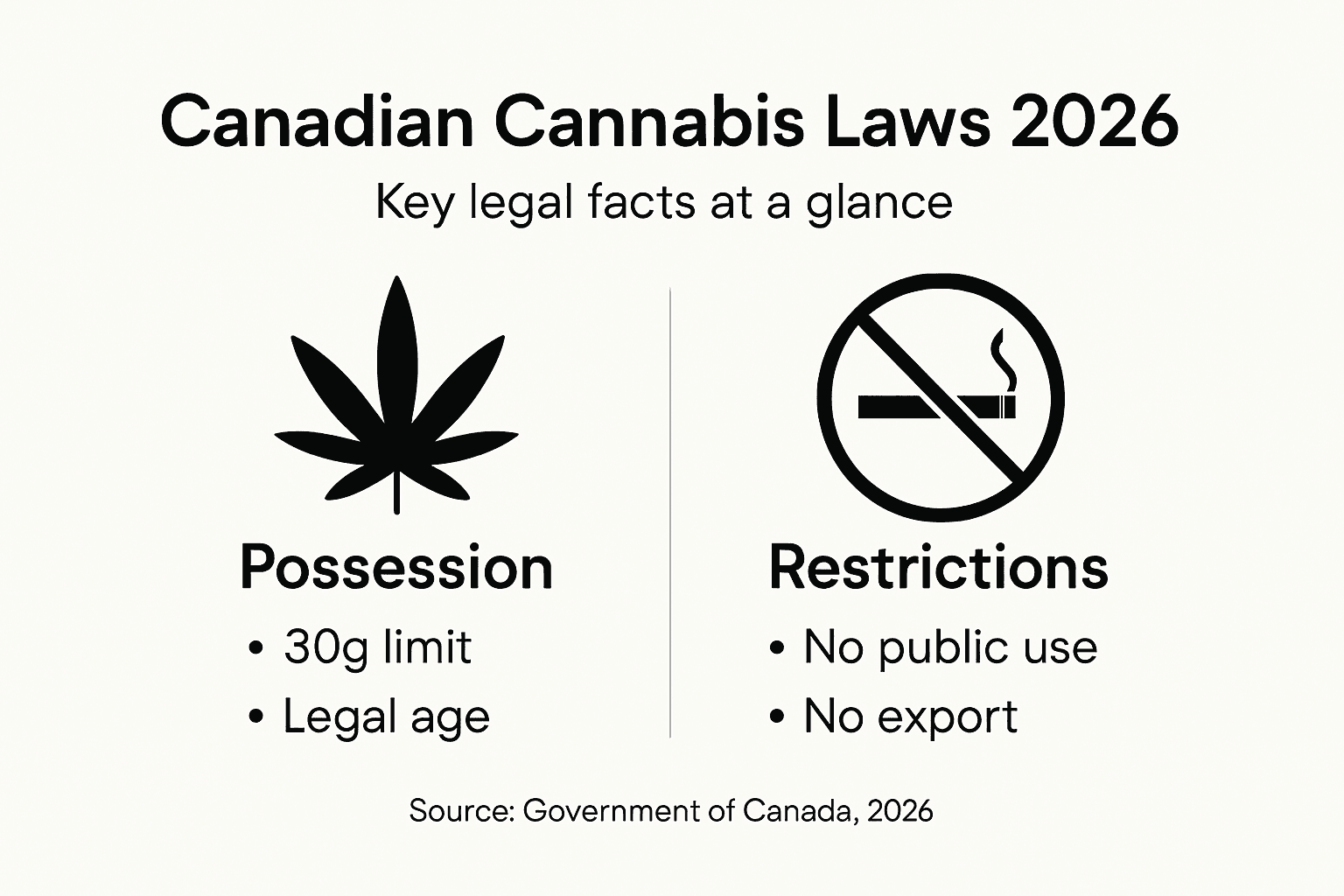
Cannabis legalization in Canada began with the federal Cannabis Act in 2018, which set the baseline rules for production, possession limits, and public health protections nationwide — things like packaging standards, THC limits on edibles, and age minimums. But the Cannabis Act deliberately left retail sale and distribution largely up to individual provinces and territories to design and administer. That decision is the root of why cannabis retail looks meaningfully different depending on where you are in the country.
In Ontario specifically, retail cannabis sales are regulated by the Alcohol and Gaming Commission of Ontario (AGCO). Any store operating under this framework needs both a Retail Operator Licence (covering the business and its owners) and a Cannabis Retail Store Authorization (covering the specific location), and must source every product exclusively through the Ontario Cannabis Store's regulated supply chain. This system is what requires lab testing, accurate labelling, and ongoing compliance inspections — the whole structure that makes a licensed Ontario dispensary a known, verifiable quantity for consumers.
Every province has built its own version of this framework, which is why licensing bodies, supply chains, and even retail rules (like minimum age or public possession limits) vary somewhat from province to province.
This is the part that's often misunderstood, and it deserves to be explained accurately rather than reduced to a simple "legal versus illegal" story. Indigenous nations across Canada hold inherent and constitutionally recognized rights to self-governance, and several First Nations communities have developed, or are actively developing, their own cannabis laws and licensing systems entirely separate from provincial frameworks like the AGCO.
This isn't a uniform picture — different communities have taken genuinely different approaches, reflecting each community's own internal deliberation and priorities:
The respectful, accurate takeaway: this is a matter of overlapping and sometimes contested jurisdiction and inherent self-governance rights, not a simple story of "rules" versus "no rules."
Whatever the jurisdictional complexity, here's the practical, consumer-focused distinction that actually matters when you're deciding where to shop:
A provincially-licensed retailer (like an AGCO-licensed dispensary in Ontario) is required to source exclusively through the province's regulated supply chain, meaning every product has been produced by a federally licensed cultivator, lab-tested for potency and contaminants, and labelled to Health Canada's standards — with regular compliance inspections keeping that system accountable on an ongoing basis.
A retailer operating under a different jurisdictional framework may have entirely different sourcing, testing, and labelling standards, depending on that specific framework's own rules and how developed its regulatory infrastructure currently is. This isn't a judgment on any particular community's approach — it's simply a practical reality: the testing and labelling guarantees you get from a provincially-licensed retailer come specifically from that province's regulatory infrastructure, and those same specific guarantees may or may not carry over identically elsewhere.
The most useful habit for any cannabis consumer, anywhere in Canada, is simply knowing what standards govern the specific retailer you're buying from — lab testing, accurate labelling, and traceable sourcing are the things that actually protect you as a buyer, whatever jurisdictional framework produced them. In Ontario, checking a retailer's AGCO licence status through the AGCO's public registry is a straightforward way to confirm you're buying from a store operating under the province's regulated system.
Cannabis jurisdiction involving Indigenous self-governance is an active, evolving area of Canadian law, and communities themselves continue to deliberate and adjust their own approaches over time. This article aims to explain the landscape as it generally works, not to characterize any specific community's governance decisions — those are matters for each nation's own internal processes, not a cannabis retailer's blog to weigh in on.
Greenbank Cannabis has held continuous AGCO licensing since 2019, meaning every product on our shelves is sourced through Ontario's regulated supply chain, lab-tested, and accurately labelled. If you ever want to verify our licensing yourself, the AGCO's public registry is the place to check. Browse our online menu or visit us in Orléans to see our full selection.
Must be 19+ with valid government-issued photo ID to purchase. Greenbank Cannabis is an AGCO-licensed cannabis retailer serving Orléans, Cumberland, Beacon Hill, Blackburn Hamlet, and Ottawa East.