
If you've searched for the Delush Magic Stick and landed here, you're likely dealing with sore muscles, joint pain, or general aches and looking for a CBD topical that's actually built to help — not just another product with a vague "wellness" label and no real explanation behind it. Here's a genuinely detailed breakdown: what the product is, what's actually in it, how CBD topicals work on a biological level, where the Magic Stick is sold, and how it compares to the CBD topical options available through a licensed cannabis retailer.
The Magic Stick is a CBD roll-on balm made by Delush, a company based in Windsor, Ontario. It's formulated with 300mg of CBD per stick, built around a blend of plant butters and essential oils — shea butter (Butyrospermum Parkii), cocoa butter (Theobroma Cacao), mango seed butter (Mangifera Indica), beeswax, arnica, and menthol — combined with hemp-derived CBD isolate. Arnica has a long history in topical folk remedies for bruising and inflammation, and menthol produces that familiar cooling sensation that temporarily distracts from and eases the perception of localized pain — the same mechanism behind products like Tiger Balm or Biofreeze, just paired here with a cannabinoid.
The product is packaged as a solid, twist-up stick rather than a liquid or cream, which is a genuinely practical design choice — it applies cleanly to a targeted area without getting product on your hands, travels well, and doesn't require you to rub in a greasy lotion. If you're dealing with something like a stiff shoulder, lower back tension, or knee discomfort and want quick, mess-free application, the format itself is a real point in its favour regardless of brand.
One detail worth understanding clearly: the Magic Stick is made with hemp-derived CBD isolate and contains no THC. That's not a minor footnote — it's the reason you'll typically find this product sold through specialty CBD shops, wellness retailers, and online CBD stores rather than through AGCO-licensed cannabis dispensaries. Non-intoxicating, THC-free, hemp-derived CBD topicals occupy a different regulatory category in Canada than THC-containing cannabis products, which is exactly why a product like this can be sold through a wider range of retail channels than anything containing THC can be.
This is the part most product pages skip entirely, and it's worth understanding before you spend money on any CBD topical, Delush or otherwise.
Your skin isn't just a passive barrier — it's an active organ with its own local version of the endocannabinoid system, a network of receptors and signaling molecules that help regulate inflammation, pain sensitivity, and immune response. When you apply a CBD balm or stick, the cannabidiol binds primarily to CB2 receptors located in the skin and underlying tissue, rather than the CB1 receptors concentrated in the brain and central nervous system. That distinction matters enormously: CB1 receptor activity is what's associated with the psychoactive effects of THC, while CB2 activity is more tied to inflammation and immune modulation. This is exactly why a CBD topical — even a well-formulated one — won't get you high or produce whole-body effects the way an ingested or inhaled product would. The action stays local, concentrated at the application site.
Research on the mechanism suggests CB2 receptor activation can help reduce local inflammatory signaling, which is part of why topicals tend to perform better for inflammation-driven discomfort — sore joints, muscle tension, arthritis-related pain — than for deep structural or nerve-related pain. A 2022 review found genuine potential for topical CBD in relieving arthritis-related pain and inflammation specifically, with better results when combined with permeation enhancers or natural carrier oils that help the cannabinoid actually penetrate the skin rather than sitting on the surface.
It's worth being straightforward about the limits of the research too: most standard CBD topicals — including simple balms and roll-ons like the Magic Stick — show minimal systemic absorption, meaning very little of the CBD actually crosses into your bloodstream under normal use. That's actually a feature rather than a flaw if localized relief is what you're after: it means the effect stays concentrated where you need it, without the drowsiness or full-body effects associated with oral or inhaled CBD. But it also means a standard topical isn't the right tool if you're chasing systemic effects like better sleep or reduced anxiety — for that, an oral tincture, capsule, or inhaled product is the more appropriate format, not a roll-on stick.
The research base here, while growing, is still described by researchers as needing considerably more human clinical trials before topical CBD's efficacy is fully established — the mechanism is well-understood, but the size and consistency of the actual pain-relief effect in real-world use is still an active area of study, not settled science with guaranteed outcomes.
Delush sells the Magic Stick directly through their own site, and it's also carried by a number of specialty CBD and wellness retailers across Canada, including several based in Ontario. Availability can shift — the product has gone on backorder in the past given how the brand manufactures in batches rather than continuous mass production — so if you're specifically set on this product, checking current stock directly with a retailer before making a trip is worth doing.
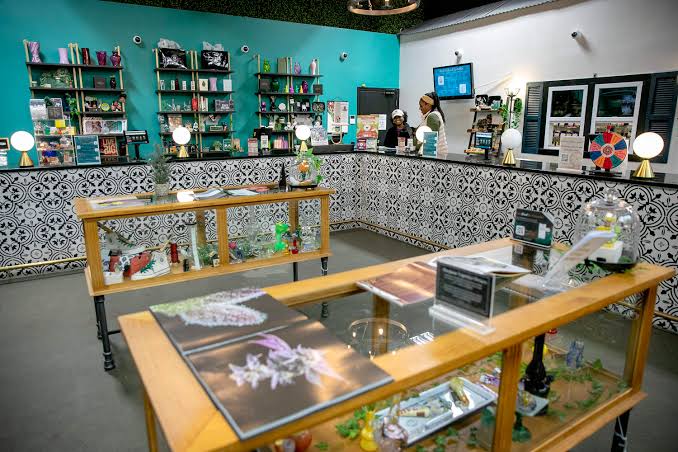
Here's the honest part: as an AGCO-licensed cannabis retailer, our shelves are built around the regulated cannabis retail supply chain, so the Delush Magic Stick specifically isn't something we stock in-store — it moves through a different distribution channel as a hemp-derived wellness product rather than through the cannabis retail system we're licensed under.
That said, if what you're actually after is topical relief for sore muscles or joint discomfort, we carry our own lab-tested CBD topical options, including nano-CBD cream, designed for the same kind of localized, mess-free application and working through the same CB2-receptor mechanism described above. The advantage of sourcing a CBD topical through a licensed cannabis retailer is the same one that applies to everything on our shelves: every product comes with verified lab testing and accurate cannabinoid labeling, so you know exactly what you're applying, backed by the same regulatory oversight that governs the rest of our inventory.
Whichever CBD topical you end up choosing, a few things are worth checking regardless of brand:
If you're new to CBD and unsure whether a topical is even the right format for what you're dealing with, here's a quick gut check:
Choose a topical (like the Magic Stick or a CBD cream) if: the discomfort is localized — a specific joint, muscle, or area — and you want targeted relief without any systemic or whole-body effect.
Choose an oral or inhaled CBD product instead if: you're after broader effects like general relaxation, sleep support, or anxiety management, since topicals largely don't cross into the bloodstream in meaningful amounts and won't deliver that kind of systemic effect.
If the Delush Magic Stick specifically is what you're after, your best bet is checking directly with Delush or a specialty CBD retailer for current availability. If you're open to a lab-tested, locally available alternative working through the same biological mechanism, and want the added assurance of a licensed cannabis retailer's testing and sourcing standards, our CBD topical selection is worth a look — stop by our Orléans location or browse our online menu to see what's currently in stock.
What is the Delush Magic Stick?
The Delush Magic Stick is a pre-filled, disposable cannabis product designed for straightforward, on-the-go use — no charging, refilling, or setup required. It's built for anyone who wants a simple, ready-to-use option without the extra steps of a refillable device.
Is the Delush Magic Stick CBD or THC?
Delush offers products across their line, so the CBD or THC content depends on the specific variant you pick up. Check the packaging or ask our budtenders in-store to confirm which version suits what you're looking for.
Where can I buy the Delush Magic Stick in Ottawa or Orléans?
Greenbank Cannabis carries Delush Magic Stick products at our Orléans location, 2208 St Joseph Blvd Unit #111. You can also order online for same-day delivery across Orléans and Ottawa East, or check current availability before visiting.
How long does a Delush Magic Stick last?
This depends on usage frequency and the specific product size, but most disposable sticks like this are designed to last through multiple sessions before needing to be replaced. Ask our team in-store for the specific puff-count or capacity for the version you're considering.
Is the Delush Magic Stick easy for beginners to use?
Yes — it's designed as a no-setup, draw-activated device, which makes it one of the more approachable options for anyone newer to cannabis vapes or sticks compared to products that require manual settings or refilling.
Do I need to charge the Delush Magic Stick?
No. It's a fully disposable, pre-charged, pre-filled device — once it's used up, it's disposed of rather than recharged or refilled.