
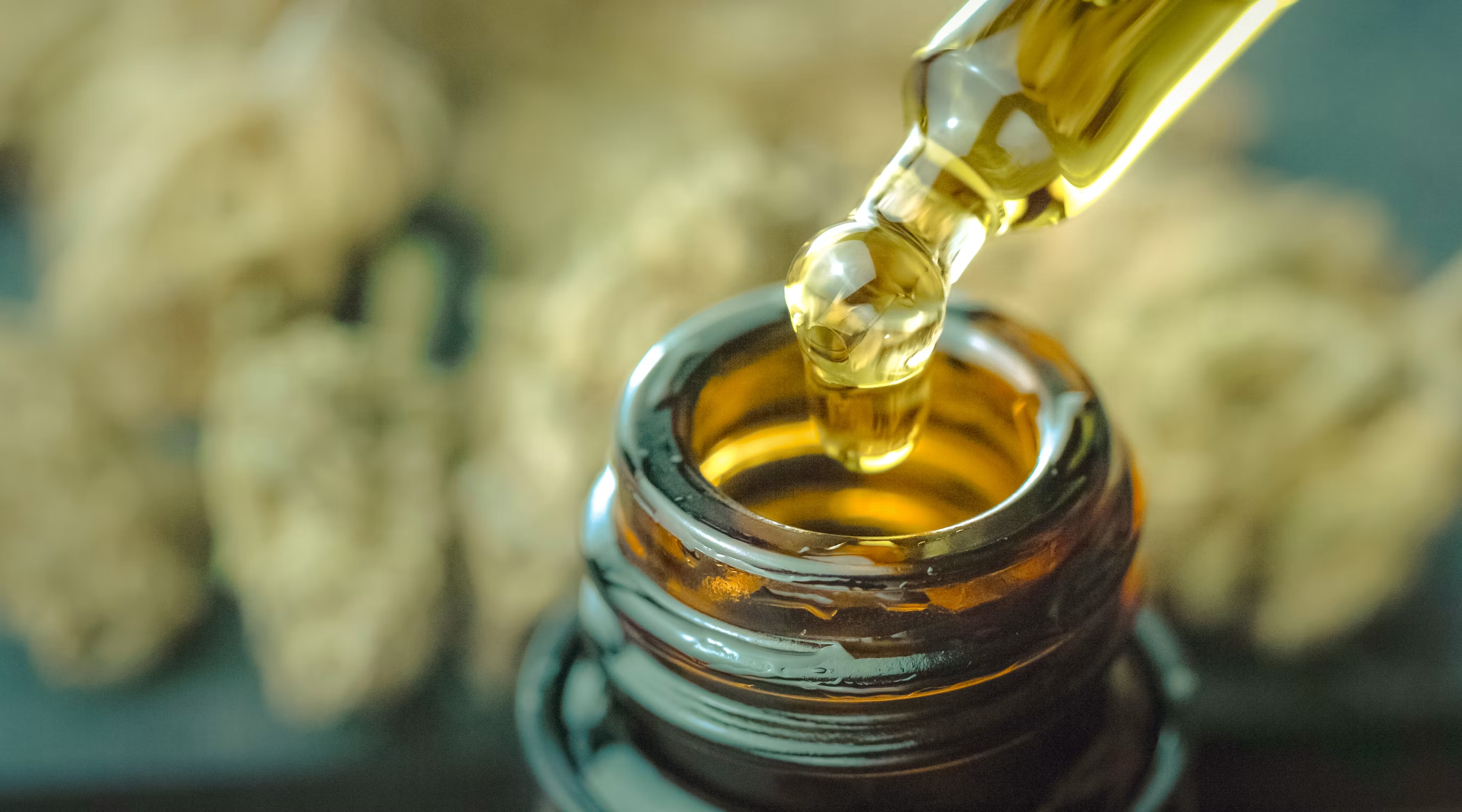
Cannabis cooking oil is one of the most versatile and rewarding ways to use legal cannabis at home in Ontario. It's easy to make and allows you more control over your cannabis cooking experience than store-bought edibles — you can infuse any type of oil including canola, vegetable, olive, peanut, and sesame oil.
This guide covers everything you need to know from scratch: what cannabis cooking oil is, why decarboxylation is the step most beginners skip, how to make it using two different methods, which oil to choose, how to dose it responsibly, what to cook with it, and — critically — where to buy quality legal cannabis flower for cooking in Orléans, Ontario, Canada.
If you're in Ottawa East and want to start cooking with cannabis, Greenbank Cannabis in Orléans is your closest AGCO-licensed dispensary, open daily from 10 AM to 9 PM with a full selection of flower suited for home infusion.
Cannabis cooking oil — often referred to as canna oil — is a carrier oil that has been infused with cannabinoids extracted from the cannabis plant. Common carrier oils include olive oil, coconut oil, and MCT oil, though other options like avocado oil or butter can also be used depending on the intended use. In addition to cannabinoids such as THC and CBD, cannabis-infused oil may contain other naturally occurring compounds from the plant, including terpenes and flavonoids, which contribute to the oil's aroma and flavour profile.
Once made, cannabis cooking oil behaves like any other cooking oil in the kitchen — it can be drizzled, sautéed, baked into recipes, or blended into sauces and dressings. The difference is that every dish made with it carries a measured dose of THC, CBD, or both.
Consuming food made with cannabis cooking oil has a lot in common with consuming dispensary edibles — compared to inhalation methods, effects take longer to kick in, tend to last longer, and can feel stronger.
Yes — with important conditions.
In Ontario, adults aged 19 and over are legally permitted to:
What is not permitted:
Making cannabis cooking oil at home using the infusion method described in this guide falls squarely within Ontario's legal framework for adult personal use. You are simply infusing a legal product you purchased legally from a licensed retailer into a carrier oil for your own consumption.
Cannabis-infused cooking oil is legal across Canada, but always buy your source material from licensed retailers to ensure product safety, proper labelling, and compliance with Canadian regulations.
Before you can make effective cannabis cooking oil, you need to understand one chemical process — decarboxylation. Skipping this step is the single most common reason homemade cannabis edibles don't work.
Raw cannabis contains very little THC. What it contains in abundance is THCA — tetrahydrocannabinolic acid — the non-psychoactive precursor. THCA must lose a carboxyl group through heat to become the psychoactive THC your body can use. This process is called decarboxylation, and without it, your edibles will be essentially inert.
When you smoke or vape cannabis, decarboxylation happens instantly — the flame or heating element activates the THCA as you consume it. When cooking, you need to apply that heat in advance, before the flower goes into the oil.
Skip this step and your edibles will have little to no effect, regardless of how much flower you use.
What you need:
The process:
240°F (115°C) for 40 minutes is the standard that produces the best balance of potency and reliability for home use. At this temperature and time, approximately 88% of THCA converts to active THC.
Step by step:
A note on smell: Open-oven decarb releases strong odours and is detectable in shared housing — plan accordingly. If you're in an apartment or shared building in Orléans or Ottawa East, consider timing your decarb when windows can be opened or when neighbours are less likely to be affected.
Temperature precision matters: The ideal decarboxylation temperature for THC is between 220°F and 240°F (105°C to 115°C). Within this range, THCA converts efficiently to THC without significant degradation. If the temperature exceeds 300°F, cannabinoids begin degrading rapidly.
The carrier oil you choose affects potency, flavour, shelf life, and how you can use the finished product. Here's a practical comparison of the most common options.
Coconut oil works best due to high fat content — 82% saturated fat, which binds cannabinoids efficiently. It has a long shelf life, is solid at room temperature for easy handling, has a neutral taste when refined, and works for both cooking and topicals.
Coconut oil is the most popular choice for cannabis cooking oil among home cooks in Ontario for good reason. Its high saturated fat content means more cannabinoid binding per tablespoon than lower-fat oils. Refined coconut oil has a neutral flavour that works in sweet and savoury recipes alike. Virgin (unrefined) coconut oil has a distinct coconut flavour that works well in baking but can be noticeable in savoury dishes.
Best for: Baking, sautéeing, capsules, topicals
Olive oil has moderate fat content (lower than coconut oil) and a distinctive flavour profile. Extra virgin olive oil adds its own strong taste to any infusion — ideal if you're making salad dressings, pasta sauces, or Mediterranean-style dishes where that flavour belongs. Light or pure olive oil has a more neutral taste.
One consideration: cannabinoids degrade when exposed to heat, light, and oxygen — store infused olive oil in an airtight, dark-coloured glass container such as an amber mason jar in a cool, dark place. Olive oil infusions are best used within 1–2 months.
Best for: Salad dressings, drizzling, pasta, savoury sauces
MCT (medium-chain triglyceride) oil is derived from coconut or palm kernel oil and has become popular with health-conscious cannabis consumers. It's liquid at room temperature, odourless, tasteless, and has a very high fat-to-oil ratio — making it highly efficient at binding cannabinoids.
MCT oil is the preferred carrier for cannabis tinctures and capsules precisely because of its neutral taste and high bioavailability. It's also easier to measure precisely than solid coconut oil.
Best for: Tinctures, capsules, coffee/smoothie additions, precise dosing
You can infuse canola or vegetable oil — all you need is some cannabis, a cheesecloth, and a saucepan or slow cooker. These are the most budget-friendly options with neutral flavour profiles. Lower in saturated fat than coconut oil, which means somewhat less efficient cannabinoid binding — but perfectly functional for most cooking purposes.
Best for: Everyday cooking, frying, budget-conscious infusion
Set your slow cooker to low or warm. Add oil and decarboxylated cannabis. Leave for 4–6 hours, stirring occasionally. For overnight infusion, use the warm setting.
This is the most forgiving method because the slow cooker maintains a consistent low temperature, reducing the risk of overheating and cannabinoid degradation. The ideal infusion temperature is 160°F to 180°F (71°C to 82°C) — at this range, the oil efficiently absorbs cannabinoids without scorching.
Step by step:
Fill the bottom pot with water. Place your oil and cannabis mixture in the top pot. Simmer the water — the water bath controls temperature and prevents direct heat contact. Infuse for 3–4 hours.
This method is preferred by more experienced home cooks because the water bath prevents the oil temperature from exceeding 212°F (100°C) — the boiling point of water — which provides a natural upper temperature limit that protects the cannabinoids.
Combine oil and decarboxylated flower in a saucepan over the lowest possible heat setting. Infuse for 2–3 hours, stirring frequently. Monitor temperature carefully — if the oil begins to simmer or smoke, remove from heat immediately. This method requires active attention and is not recommended for first-time infusions.
Unlike products from licensed dispensaries, homemade edibles are nearly impossible to dose accurately. This is the honest reality of home cannabis cooking. Even with careful measurement, variables including the starting potency of your flower, the efficiency of your decarboxylation, and the consistency of your infusion all affect the final concentration.
Start with a known quantity. If your flower is labelled at 20% THC (200mg THC per gram), and you used 7g, your theoretical maximum is 1,400mg THC in 1 cup of oil. However, decarboxylation and infusion efficiency are never 100% — a realistic extraction rate is 60–75%, giving you approximately 840–1,050mg THC per cup.
Per tablespoon (15ml from a 240ml cup): approximately 52–66mg THC. This is a significant dose — much higher than a standard Ontario dispensary edible (maximum 10mg per package).
Start with a very small amount. For a first test, use ¼ teaspoon of your oil in a recipe and wait a full 2 hours before assessing the effect. We always recommend "start low and go slow" with cannabis edibles.
Cook conservatively. A practical approach: use your cannabis oil diluted with regular oil in a 1:4 or 1:8 ratio in recipes — cannabis oil to regular oil. This spreads the dose more manageably across a dish.
Edibles hit differently than smoking. Edibles made from decarbed cannabis take 45–90 minutes to kick in and last 4–8 hours — significantly longer than smoking or vaping. Never re-dose because "nothing is happening" at 45 minutes — wait the full 2 hours.
Once you have a jar of cannabis cooking oil, the applications are nearly unlimited. Here are the most popular uses among Ontario home cooks.
Baked goods — Brownies, cookies, and muffins are the classics. Substitute cannabis coconut oil for regular oil or butter in any recipe. The baking process keeps temperatures low enough that THC is not significantly degraded (oven temps of 325–350°F / 163–177°C are safe for brief baking times).
Salad dressings — Cannabis olive oil drizzled over a salad is one of the most discreet and easy preparation methods. No cooking required, so potency is fully preserved.
Pasta sauces — Add a measured amount to marinara, pesto, or cream sauces during the final stages of cooking (off heat) to minimise THC degradation from prolonged high-heat cooking.
Smoothies and coffees — MCT cannabis oil blends invisibly into coffee, smoothies, or protein shakes. This is the most precise dosing format for daily users.
Drizzled over food — The simplest method. A measured ¼–½ teaspoon of cannabis oil drizzled over cooked food (pizza, toast, roasted vegetables) allows accurate dosing with zero additional cooking.
Capsules — Fill empty gel capsules with measured amounts of MCT cannabis oil for the most precise, discreet, and consistent dosing format. Capsules are available at most health food stores.
The quality of your cannabis cooking oil depends directly on the quality of the flower you start with. This is where buying from a licensed dispensary matters most.
Greenbank Cannabis in Orléans, Ontario, Canada carries a full selection of dried flower from Ontario's top cultivators — available in every price range and format suited for home cooking.
Budget flower for cooking. You don't need your premium craft flower for cannabis oil. Greenbank carries value-priced options in 14g and 28g formats — brands like Good Supply, Shred, and Dime Bag offer quality flower at accessible price points that make great infusion material. A 28g purchase gives you enough to make 2–3 batches of infused oil.
THC percentage. Higher THC flower gives you a more potent oil — but potency is manageable through dilution in recipes. A 20–22% THC flower at 28g gives you more than enough to make a strongly infused oil and dilute it for casual cooking.
Shake and milled flower. Some brands sell pre-milled or shake formats at lower price points — ideal for infusion since you skip the grinding step. Ask Greenbank staff for current milled flower options.
Indica, sativa, or hybrid. The strain type affects the terpene profile of your oil, which slightly affects flavour and aroma. For cooking, most people choose based on the experience they want — indica-leaning strains for evening cooking, sativa or hybrid for daytime use.
Check the live menu at shop.greenbankcannabis.com/menu/ for current stock and pricing before visiting.
Store your infused oil in an airtight, dark-coloured glass container — such as an amber mason jar — in a cool, dark place such as a pantry or cupboard, away from the stove.
Practical storage guidelines:
Always label your container with: the strain used, the date made, and a potency estimate. Never leave unlabelled cannabis oil accessible to anyone who doesn't know what it is — including children, guests, or housemates.
Keep all cannabis cooking oil stored out of reach of children and pets. Child-resistant containers are strongly recommended.
Hours: Open daily, 10 AM – 9 PM — including weekends and statutory holidaysOnline menu: shop.greenbankcannabis.com/menu/Same-day delivery: Available via Uber Eats across Ottawa EastLocation: Orléans, Ontario, Canada
Browse current flower stock and pricing before visiting. Ask staff for their current recommendation for cooking — they'll point you toward the best value-per-gram option for infusion.
Is making cannabis cooking oil legal in Ontario?Yes. Adults aged 19 and over in Ontario can legally purchase cannabis flower from an AGCO-licensed retailer and make cannabis-infused products including cooking oil for personal home use. Selling or distributing homemade infused products is not permitted.
Where can I buy cannabis flower for cooking in Orléans?Greenbank Cannabis in Orléans, Ontario, Canada carries a full range of dried flower suited for home infusion — from value-priced budget options in 28g formats to craft strains. Open daily 10 AM–9 PM with same-day delivery across Ottawa East.
What is the best oil to use for cannabis cooking oil?Coconut oil is generally recommended for its high saturated fat content, which binds cannabinoids efficiently. MCT oil is preferred for precise dosing in tinctures and capsules. Olive oil works well for savoury cooking. All three are available at grocery stores across Ottawa East.
Do I need to decarboxylate cannabis before making cooking oil?Yes — this is the most critical step. Raw cannabis contains THCA, not THC. Without decarboxylation (applying controlled heat at 240°F / 115°C for 40 minutes), your cooking oil will have little to no psychoactive effect.
How long does cannabis cooking oil take to work?45 minutes to 2 hours for onset, with effects lasting 4–8 hours. This is the same as any cannabis edible. Always start with a very small amount and wait a full 2 hours before considering more.
How do I know how strong my cannabis cooking oil is?Homemade cannabis oil potency is difficult to calculate precisely. A rough estimate: if you used 7g of 20% THC flower in 1 cup of oil, with 65% extraction efficiency, you have approximately 910mg THC per cup or ~57mg per tablespoon. Start with ¼ teaspoon in a recipe until you understand your oil's potency.
How long does cannabis cooking oil last?Properly stored in an airtight container in the refrigerator, cannabis cooking oil lasts 2–3 months. Coconut oil has the longest shelf life; olive oil should be used within 1–2 months.
Can I use cannabis cooking oil in any recipe?Yes — with a caveat. Avoid recipes that require sustained high heat (deep frying above 350°F / 177°C) as this can degrade THC. Cannabis cooking oil works best in baked goods, dressings, sauces added off heat, drizzled over finished food, blended into drinks, or in capsules.
What happens if I use cannabis flower without decarboxylating it?The oil will contain THCA rather than THC and will produce little to no psychoactive effect when consumed. The process of infusing into oil at low temperatures (160–180°F) is not hot enough to fully decarboxylate the flower.
Can I use cannabis cooking oil I buy from a store instead of making my own?Ontario's licensed cannabis retail system does not currently sell pre-made cannabis cooking oil directly (OCS regulations govern edibles, not infused oils sold as ingredients). The practical path is to purchase flower from a licensed dispensary like Greenbank Cannabis and infuse it at home following this guide.
Greenbank Cannabis is an AGCO-licensed cannabis retailer serving Orléans and Ottawa East, Ontario, Canada since 2019. Cannabis is for adults aged 19 and over. This guide is for informational purposes only. Always consume cannabis responsibly and in accordance with Ontario and federal Canadian law. This does not constitute medical advice.