
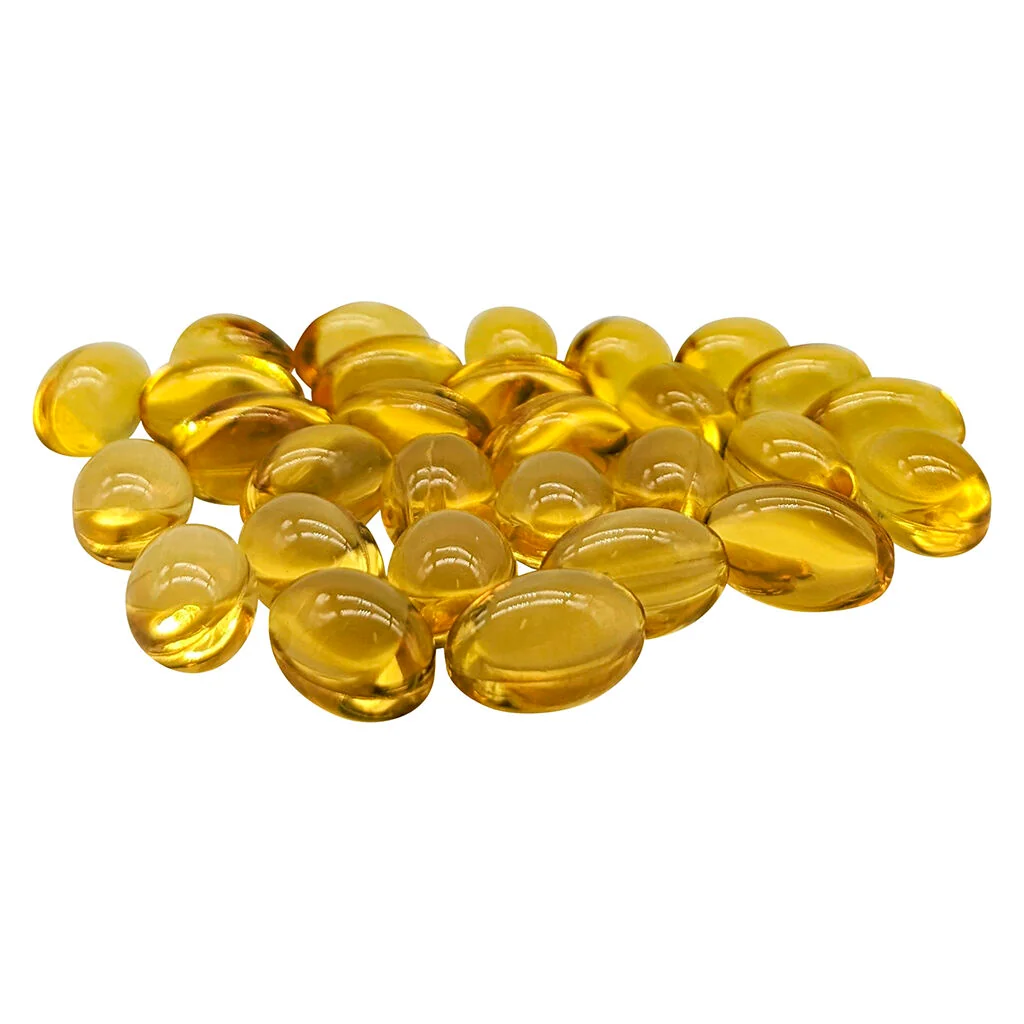
CBD gel caps have become one of the most popular ways to take CBD, and it's not hard to see why — no taste, no dropper, no guessing how many drops equal your dose. But "easy to use" doesn't mean "one-size-fits-all," and there's more to picking a good one than grabbing whatever's on the shelf. Here's a genuinely thorough guide to what CBD gel caps actually are, how they compare to other formats, and what to actually check before you buy.
A CBD gel cap — also called a softgel — is essentially CBD oil measured into an exact, consistent dose and sealed inside a soft, swallowable gelatin (or plant-based) shell. Structurally, it's not a fundamentally different product from CBD oil in a dropper bottle; it's the same oil, pre-measured and packaged for convenience. The appeal is entirely about the experience: no taste, no measuring, no risk of spilling a dropper in your bag, and a format that slots naturally into an existing supplement or vitamin routine.
In Ontario's legal cannabis retail market specifically, CBD gel caps sold through AGCO-licensed dispensaries are cannabis-derived, sourced through the regulated Ontario Cannabis Store supply chain, lab-tested for potency and contaminants, and labelled with an exact milligram dose per capsule — which puts them in a meaningfully different category from unregulated hemp-derived CBD capsules sold outside the licensed cannabis retail system, where testing and label accuracy aren't guaranteed in the same way.
This is the part worth understanding properly, because it directly affects what you should expect from the format.
When you swallow a CBD capsule, it doesn't go straight into your bloodstream the way sublingual oil does. Instead, it travels through your digestive system and liver first — a process called first-pass metabolism. Your liver processes a portion of the CBD before it ever reaches general circulation, which has two practical consequences: onset is slower, typically 45 minutes to 2 hours before you notice an effect, and bioavailability is lower than other formats, meaning a smaller percentage of the CBD you swallowed actually makes it into your bloodstream to do anything. Research estimates the bioavailability of a swallowed CBD capsule at roughly 13 to 19 percent — so from a 25mg capsule, you might actually receive somewhere in the range of 3 to 5mg of usable CBD into your system. That's a meaningful gap between the number on the label and what you actually absorb, and it's true of capsules generally, not a flaw specific to any one brand.
The tradeoff for that slower, less efficient absorption is duration. Because the CBD releases more gradually as it moves through your digestive system, capsules tend to produce longer-lasting effects than sublingual oil — commonly cited in the range of 6 to 8 hours, compared to roughly 4 to 6 hours for oil taken under the tongue. If you want something that covers you through a full workday or a full night, that slower, longer curve can actually be an advantage rather than a downside.
Choose gel caps if:
Choose CBD oil instead if:
Neither format is objectively better — they solve different problems. If consistency and convenience matter more to you than speed, gel caps are the better fit. If you want to titrate your dose carefully or need a faster effect, oil generally wins.
The milligram dose per capsule, clearly stated. A quality product tells you exactly how much CBD is in each individual capsule, not just a total bottle amount — you shouldn't have to do math to figure out your per-dose intake.
Whether it's CBD-only or a CBD:THC blend. Ontario's legal capsule category includes pure CBD options as well as CBD:THC combination capsules. If you specifically want the non-intoxicating experience of CBD alone, confirm the ratio before buying — a capsule labelled simply "cannabis oil capsule" isn't automatically THC-free.
Full-spectrum, broad-spectrum, or isolate. Full-spectrum products retain a wider range of naturally occurring cannabinoids and terpenes from the plant (which may include trace THC), broad-spectrum aims for a similar range with THC removed, and isolate is CBD alone with nothing else. This affects both the experience and, if you're subject to any kind of drug testing, matters more than most buyers realize.
Batch testing and lab results. Through a licensed Ontario retailer, this is guaranteed as part of the regulated supply chain — but it's still worth knowing that this is exactly what separates a licensed product from an unregulated one where testing may be inconsistent or absent entirely.
Capsule shell material, if it matters to you personally — most CBD softgels use gelatin, which isn't vegan; plant-based alternatives exist but are less common in the legal cannabis capsule category specifically.
Because bioavailability through capsules runs lower than other formats, and onset is slow enough that it's easy to assume a dose "isn't working" before it's actually kicked in, the safest approach with any new CBD capsule is to start low, wait out the full 2-hour onset window before considering more, and adjust gradually from there based on how you actually feel — not based on the milligram number alone, since that number reflects what's in the capsule, not what your body will actually absorb.
Greenbank Cannabis carries lab-tested CBD products as part of our regular Orléans inventory, sourced through the same regulated supply chain that governs everything on our shelves. Specific capsule availability shifts with each shipment, so check our online menu for what's currently in stock, or stop by in person where our team can help you compare capsules against our other CBD options — including oil, flower, and topicals — based on what you're actually trying to get out of it.