
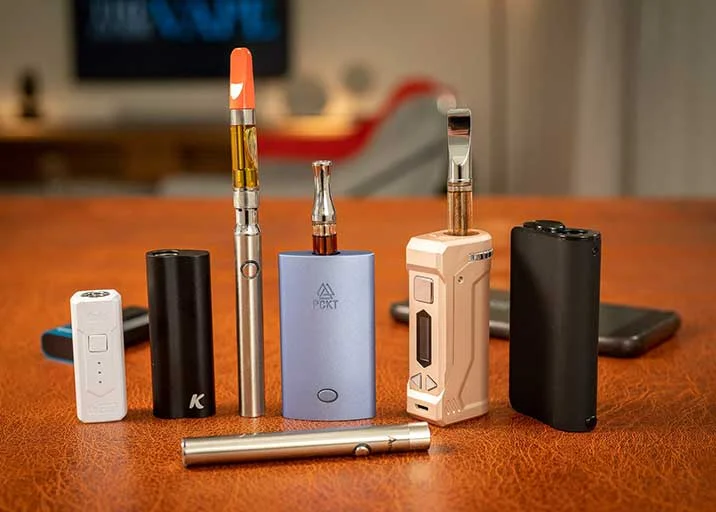
Most vape problems people bring to our counter aren't cartridge problems. They're hardware problems — a battery set too high, a clogged mouthpiece, a cart screwed in one turn too far, or a $15 pen doing exactly what $15 pens do.
Cartridge reviews are everywhere. Almost nobody explains the other half: what to put the cart on, what settings to use, what it should cost, and how to fix it when it stops working. That's what this guide is.
We're a licensed cannabis store in Orléans, Ottawa East. 19+ with valid ID.
It's a thread size, nothing more. The name comes from ten threads at 0.5mm each, and it became the de facto industry standard years ago. If a cartridge is "510 thread," it screws onto any 510 battery, regardless of brand.
That standardization is the whole reason to care. A decent 510 battery works with essentially every threaded cart on the Ontario market — so hardware is a one-time purchase and carts become interchangeable. Buy well once.
The exception: some brands use proprietary pod systems that only accept their own pods. These aren't 510 and aren't cross-compatible. Check before you buy a system you'll be locked into — it's the single most common buyer's-remorse purchase in this category.
1. Disposables (all-in-one)Battery and cannabis oil sealed in one unit, used until empty, then recycled. Zero learning curve, no compatibility questions, no maintenance. Costs more per gram over time, and you throw away a lithium battery with every one. Best for occasional use or trying a brand.
2. 510 battery + cartridges (the standard)Buy a battery once, then buy carts. Cheaper per gram over the long run, far more choice, and you control voltage. This is what most regular consumers end up on.
3. Proprietary pod systemsBrand-specific hardware, brand-specific pods. Sometimes excellent engineering; always a lock-in. Fine if you love that brand's oil, frustrating if you don't.
Basic draw-activated pen — the default starting pointNo buttons. Inhale and it fires. Usually a single fixed voltage, slim, pocketable, cheap. Genuinely fine for most people, and the right answer if you just bought your first cart and want the simplest thing that works.
Variable-voltage button battery — the upgrade worth makingThree to four voltage settings, usually selected by clicking the button. This is the one we recommend to anyone vaping regularly, because voltage control is the difference between tasting your cart and scorching it. Typically includes preheat mode, which is the fix for the clogging problem described below.
Palm / box-style batteryLarger body, bigger capacity, often magnetic cart attachment instead of threading. Better battery life, more comfortable in hand, less pocketable. Good for home-heavy use.
What to look for, regardless of style:
Most carts are happiest lower than people assume. A rough guide:
VoltageWhat happensBest for2.0–2.5VCool, light vapour, maximum flavourDistillate carts, terpene-rich oil, flavour chasers2.5–3.0VBalanced vapour and tasteThe safe default for most carts3.0–3.6VBigger clouds, hotter draw, flavour drops offThicker oils, larger sessions3.6V+Risk of burning the oil and the coilRarely the right answer
Start at the lowest setting and work up. If a cart tastes burnt, harsh or acrid, you're too high — that flavour is oil scorching, and it doesn't come back once a coil is damaged. If you're getting almost no vapour, step up one level.
Short draws beat long ones. Three to five seconds is plenty; ten-second pulls overheat the coil and cook whatever's left.
Vape pricing has fallen substantially since legalization — average cartridge prices dropped roughly 41% in the years after legalization, from around $32 per gram to about $19. Hardware followed the same curve.
General shape of the market:
The honest math: a $30 variable-voltage battery pays for itself quickly against disposables, and lasts years if you don't lose it. If you vape more than occasionally, buying hardware once is the single biggest saving in this category — the same logic as the price-per-gram math in our value guide.
"My cart is clogged / no airflow."Oil has cooled and thickened in the mouthpiece or airway. Use your battery's preheat function for 10–15 seconds. No preheat? Warm the cart in your hand for a couple of minutes, or take two or three gentle draws without firing to pull air through. A thin pin or paperclip clears a blocked mouthpiece. Don't apply a lighter to it — you'll degrade the oil and possibly the housing.
"It tastes burnt."Voltage is too high, or you're chain-vaping and the coil isn't cooling between draws. Drop a setting, shorten your pulls, and wait 30 seconds between hits. If a coil is already burnt, the taste stays — that cart won't recover.
"It's leaking."Usually over-tightening, heat, or storing it horizontally. Screw carts on until they're snug and stop — a quarter-turn past contact is enough. Store upright, mouthpiece up, and keep it out of hot cars.
"The battery blinks and won't fire."Blink patterns are manufacturer-specific, but three blinks commonly means a connection problem and ten to fifteen blinks usually means dead battery. Try: charge it fully; unscrew the cart a quarter turn (over-tightening pushes the contact pin down and breaks the connection); clean both contact points with a dry cotton swab.
"No vapour, but the battery fires."Bad connection or a dead coil. Check the contact pin, clean the threads, try a different cart to isolate whether it's the hardware or the cartridge.
"It stopped hitting halfway through."Often the cart has flooded the airway from being stored on its side, or the remaining oil is below the coil intake. Store it upright and try preheat.
This is genuinely local and almost never mentioned: cannabis oil thickens in cold, and lithium batteries lose capacity in it. In an Ottawa January you'll get more clogs, weaker draws and shorter battery life — not because your hardware failed, but because it's minus twenty.
Practical fixes: keep the pen in an inside pocket rather than a coat pocket or a car, use preheat before the first draw of the day, and don't charge a battery that's still cold from outside — let it come to room temperature first. Conversely, don't leave a cart in a car in July either; heat thins the oil and causes leaking.
Disposables win on: zero setup, nothing to learn, nothing to maintain, good for travel and for trying a brand once.
A 510 battery wins on: cost per gram over time, cart selection, voltage control, flavour, and waste. It loses on convenience and on the up-front purchase.
Our general steer: if you vape more than a couple of times a month, buy a variable-voltage battery. If it's rare and occasional, disposables are a defensible choice and nobody should make you feel bad about it.
Green Bank Cannabis, [ADDRESS-LINE], Orléans — open daily [HOURS], with same-day delivery across [ZONES]. We stock batteries alongside the full cart selection, so you can walk out with hardware and something to put on it in one trip. Bring your existing pen in if it's misbehaving — nine times out of ten it's a contact-pin issue and takes thirty seconds to sort at the counter. 19+ with valid ID.
What is a 510 battery?
A battery with the industry-standard 510 threading, compatible with any 510-thread cannabis cartridge regardless of brand. It's the most common vape hardware standard in Canada.
What voltage should I use for a cannabis cart?
Start at the lowest setting, usually around 2.0–2.5V, and work up. Most distillate carts perform best between 2.5V and 3.0V. Higher voltages produce more vapour but risk burning the oil and the coil.
Why is my cart clogged and how do I fix it?
Oil thickens as it cools and blocks the airway. Use your battery's preheat function, warm the cart in your hand, or take a few gentle draws without firing. A thin pin clears a blocked mouthpiece. Never apply a flame to a cartridge.
How much does a vape battery cost in Ottawa?
Basic draw-activated pens often sit under $20, variable-voltage batteries typically run $20–$40, and larger palm-style batteries $40–$70. Check our live menu for current pricing.
Are all cannabis cartridges compatible with all batteries?
510-thread cartridges work with any 510 battery. Some brands use proprietary pod systems that only work with their own hardware — check before buying into a closed system.
Why does my battery blink and not work?
Blink patterns vary by manufacturer, but frequent causes are a discharged battery or a connection problem from over-tightening the cart. Charge fully, unscrew the cart a quarter turn, and clean the contact points with a dry swab.
Do vape batteries work in cold weather?
Less well. Cold thickens cannabis oil and reduces lithium battery capacity, so expect more clogging and shorter runtime in an Ottawa winter. Keep the pen in an inside pocket and use preheat before the first draw.
How do I dispose of a vape battery?
Lithium batteries shouldn't go in household garbage or recycling. Many retailers and municipal hazardous waste depots accept them — ask in store or check the City of Ottawa's guidance.